 👋🏻Fudail M Zafar
The First Client
How a Kebab Shop Got Me My First Client
A Framer template, an unpaid website, and a shawarma that turned into my first real freelance client.
Everyone wants to know how you land your first client. My honest answer tends to surprise people: it started at a kebab shop.
I'd already been stacking up complementary skills — design fundamentals from a web design course, then front-end and full-stack development on top of it — but I hadn't worked with an actual client yet. No real business, no real problem, no one on the other end waiting on my work. That changed because I liked shawarma a little too much.
The Kebab Shop
There's a place near me in Royapettah, Chennai, called OMG — Oh My Goodness — Kebabs. Lebanese shawarma, kebabs, BBQ, the works.
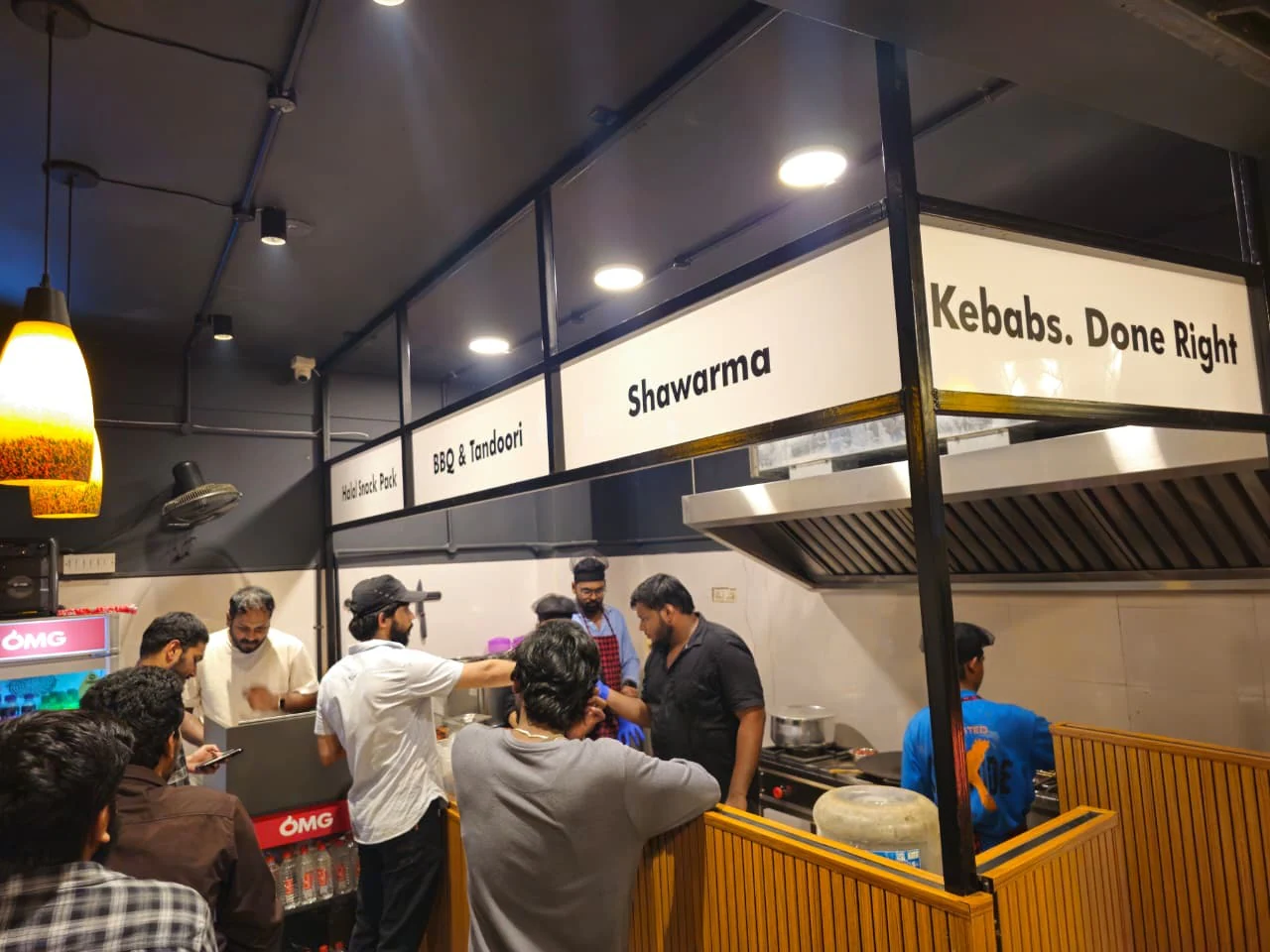
I went often enough that I got friendly with the founders, Imdad, Niranjan, and Abdul, the way you do when you become a regular somewhere.
At the time I was learning Framer, and one day it clicked: why not build them a website? I picked a template, changed the colors, swapped in their own photos, rewrote the copy to sound like them. Nothing built from scratch, but it worked, and they were genuinely happy with it.
Here's the catch. They were running a small, busy kebab shop, not a company with a marketing budget, and Framer wanted close to ₹12,000 a year to keep a fully customizable site like that live. For 3 guys managing a grill through a dinner rush, that math didn't work. The site is still up today, at omgkebabs.framer.website, a nice little relic of where this all started — but it never turned into client work.
What it did turn into was a relationship. And that relationship is where the actual story starts.
The Second Business
Niranjan, it turned out, shared about a second business: Trueblu, a consultancy that helps students study, work, and eventually settle in Australia, New Zealand, and Ireland. He mentioned it in passing, then showed me their current website.
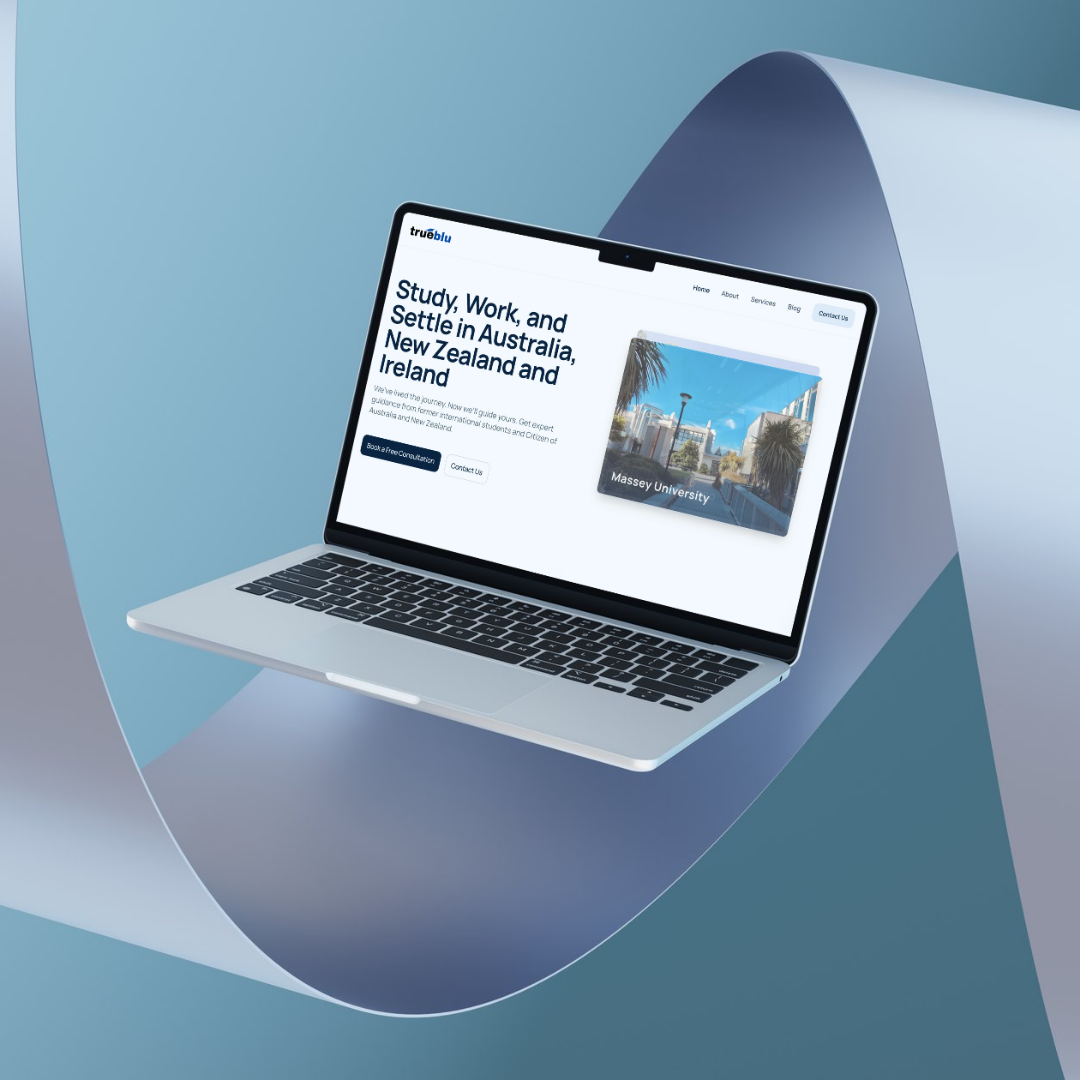
It was rough. Two pages, sitting on Zoho Sites, and it looked like it had been designed in 2015 — which, in web design years, is a different era. I'd just watched a small business hesitate over ₹12,000 a year for a site builder, so my pitch to Trueblu wasn't "let's build something impressive." It was "let's build something you actually own." No page-builder subscription, no recurring platform tax — a custom-coded site built on Next.js, deployed and maintained by them. No middlemen.
Building it from scratch
I started where any small consultancy should: research. I looked at how other study-abroad sites handled typography, layout, and information hierarchy, and dug into who actually lands on a site like this — mostly students, mostly impatient, mostly wanting to know immediately whether this consultancy can get them where they're trying to go.
The first version was deliberately minimal: a homepage, a blog, a contact page. No fluff.
Then I sat down with the co-founders, and their feedback reshaped the whole thing — rightly. Students don't just want a nice-looking site, they want proof: which countries, which universities, which outcomes. So we rebuilt around that. Dedicated sections for services, testimonials, and CTAs. A wall of partner university logos — UNSW Sydney, Monash, Otago, among others. Custom animations so the site felt current instead of dated. And a blog seeded with the posts a worried applicant actually searches for — acing a visa interview, choosing between universities that all look the same on paper.
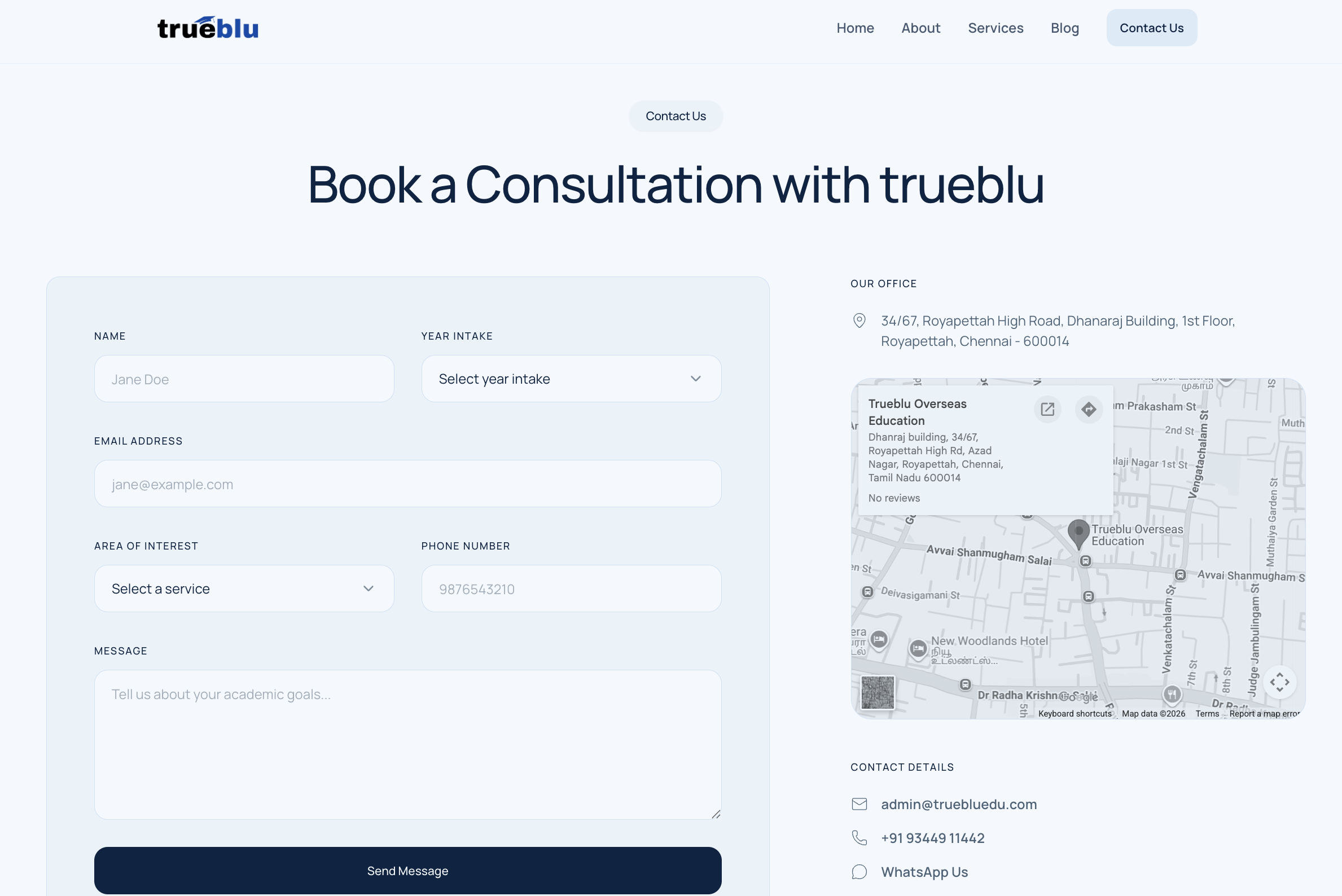
For lead capture, I skipped anything that cost money and built a custom contact form instead — every submission from the site landed straight in their inbox, no recurring cost, which mattered to a small team watching every rupee.
The part I'm proudest of, though, is what I did with AEO — Answer Engine Optimization. SEO gets you found on Google. AEO is its newer, less-talked-about cousin: structuring content cleanly enough that when someone asks an AI assistant about studying in New Zealand or Australia, it can actually crawl the site, understand it, and surface Trueblu as a real answer. It wasn't a mainstream thing to optimize for yet, and getting in early on it felt like a genuine edge.
Before and After
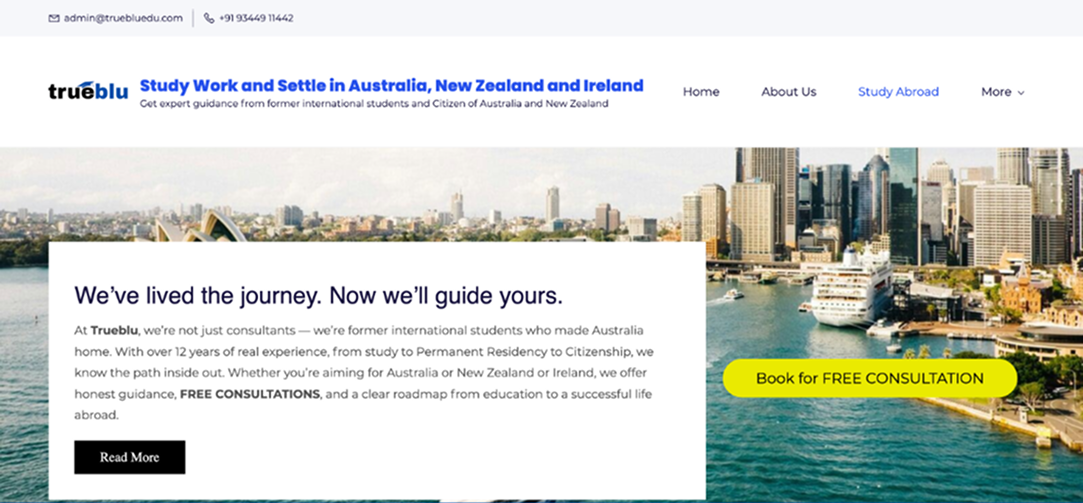
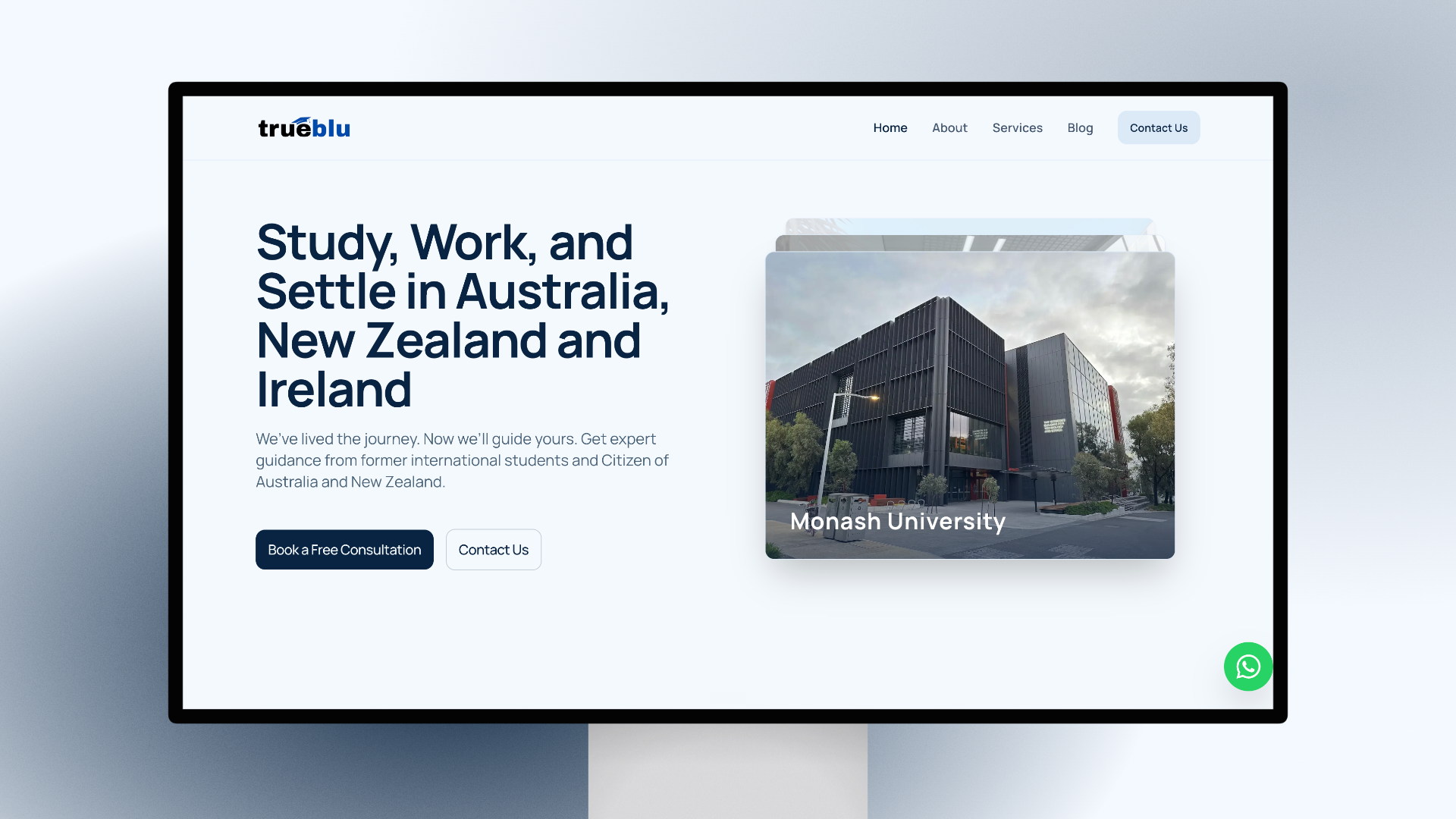
Side by side, the first thing anyone notices is the Opera House. The old hero leans on Sydney harbor at golden hour, and it's fair photography — some people will argue it does something the rebuild doesn't, selling the feeling of being abroad, the version of the dream a prospective student is already chasing.
I disagree, and the disagreement was deliberate. I wanted this to be a conversion-focused site, not a travel brochure, so I leaned on communication design instead of scenery. Anyone looking at a study-abroad consultancy already wants to go abroad — that part isn't in question. What they're actually deciding is whether this consultancy can get them there. So instead of a stock skyline, the rebuild leads with the universities themselves and what a degree from one of them actually gets you, backed by calls to action people don't have to hunt for — a clear "Book a Free Consultation" button and a WhatsApp CTA for anyone who'd rather just message. Aspiration gets someone to stop scrolling. Proof, and a low-friction way to act on it, is what actually converts.
Where it landed?
The results didn't showed up fast once the site went live. Real inquiries started landing after starting ads into Trueblu's inbox — actual students, not just traffic — and not long after, the team sent over a testimonial:
Shoutout to Fudail for doing an awesome job on our website! He understood our job functioning and gave us a Trendy and fully functioning website. He has in-depth knowledge in the whole process. The whole process was smooth, communication was easy, and he really nailed the look we were going for. Thanks for all the effort and quick updates. Would happily continue working together!
That 2015 Zoho site? Has now grown into an 11-page site that scores 100/100 on Answer Engine Optimization, across:
Findability
Quotability
Understandability
Trustworthiness.
Not bad for a project that started because I liked kebabs & shawarma a little too much. Lol.
If you're looking for your first one
Finding your first client is the hardest part of freelancing — harder than any of the actual design or code.
My honest advice: stop looking for "a client" and start looking for a small business or startup near you with a real, fixable problem. Something you could make more affordable, more presentable, or just less stuck in 2015.
The goal is always the same, no matter who you're working with: drive more revenue in, push unnecessary costs out, and build something the target audience actually trusts. If you've picked up both the design sense and the front-end or full-stack skills to ship it yourself, that combination is worth more than either half alone.
It was for me.
More from Fudail M Zafar
From a Metro Ride to Open Source
4 min read